Tuesday, May 24, 2016

7 Cool Things We Never Knew Lavender Could Do

Add this wonder plant to your farmers’ market shopping list.


Maybe you’re thinking of planting lavender because it’s a beautiful addition to any flowerbed and because bees seem to love it. But its usefulness doesn’t stop there. Here are seven ways to put it to work at home outside or in an indoor herb garden.
1. Keep Moths Away
Dried lavender is a popular natural alternative to mothballs, which contain toxic pesticides. The scientific data is a little sparse, but one study did find that lavender essential oil was an effective insecticide against a specific type of moth larvae (orgyia trigotephras, to be exact), so we say it’s worth a shot. Fill small sachets with dried lavender and keep them tucked in your closet and wardrobe. Moth problem or not, these pouches will do double duty by leaving your clothes smelling fresh and clean.
2. Make A Fragrant Wreath
In aromatherapy, lavender is used to relieve anxiety and boost mood, so keeping it around the house may help you to relax after a long day. Incorporate it into your décor by learning How To Make A Lavender Wreath that will freshen the air and add charm to any room.
3. Sanitize Hands
Lavender essential oil has antibacterial properties, making it a popular ingredient in many organic and homemade hand sanitizers. You can find lots of DIY recipes online, many of which include aloe vera gel and witch hazel in addition to lavender oil.
4. Clean Up Contaminated Soil
Several studies have found that planting lavender is an effective way to restore contaminated land, such as former mine sites, because it removes heavy metals and other pollutants from the soil. Even better, these contaminants don’t affect the quality of the lavender plant or its essential oil.
5. Make A Mean Lemonade
Lavender is the secret to ultra-refreshing, lemonade. Simply blend lavender and sugar together before mixing with water and lemon for a floral infused thirst-quencher that’s naturally pinkish-purple in color.  
6. Take An Aromatherapy Bath
We’ve already mentioned lavender’s soothing effect, and the best place to take advantage of it is in the bathtub. Whip up an easy batch of rosemary-and-lavender bath salts in your stand mixer with homegrown or farmers’ market herbs for a therapeutic soak. Or add it to a homemade shampoo. Bonus: Treat your body to a rub with healing Tulsi Luminous Lavender and Pink Sea Salt Body Scrub
7. Help You Sleep
Science confirms what people have known for centuries: The scent of lavender has a soothing, sedative affect that can help you get to sleep. Make a tea with the flowers before bed or stuff a lavender sachet inside your pillow to help you on your way to sweet dreams and kiss the melatonin pills goodbye. 

"I Tried Oil Pulling For A Month And This Is What Happened"

Can you swish your way to healthier gums and a calmer mind?


The practice of oil pulling is said to whiten teeth, treat gum disease, clear up acne, fight migraines, cure jaw pain, purge toxins, and improve overall health and well-being, but that’s not why I tried it. In fact, I didn’t know any of these “promises” when I started swishing oil around in my mouth. I did it because my yoga teacher, Lorilee Gillmore, recommended it. Not only is she a kick-ass yoga instructor and owner of Phoenix-based Moksha Ayurveda, (a center for the ancient science and medical arm of yoga dating back more than 3,000 years), she's also the picture of health and happiness. “Ama, which is known as toxicity in Ayurveda, builds up on the mouth and tongue,” she explained one day. “Oil can pull the toxicity out of the mouth.” I was game. I got started the next day, and almost a year later, I'm still going strong.
Not that it was love at first swish. The mouth feel of oil isn’t silky like wine, and that first tablespoon of olive oil was like gargling with grease, but still I swished and swished for what felt like forever. Four minutes in, I’d had it and couldn’t spit the oil out fast enough. The next day, I switched to cold-pressed organic coconut oil, which made all the difference. Any vegetable cooking oil will do—sesame, sunflower, grape seed—so go with the one you like best, and opt for a high-quality organic version, because you are using it as medicine, says Lorilee. (We like Organic Coconut Oil.)
I kept at oil pulling, and before I knew it, 4 minutes every day stretched to 15, and my gag reflex turned off. But even better, the swish turned meditative. Instead of trying to talk with an oil spill in my mouth—which, spoiler alert, is nearly impossible—the silent morning ritual became akin to a killer meditation session. My kids quit asking me questions when they saw my pursed lips, and the ocean-like sound of the swishing worked like sound therapy on my monkey mind. And yes, my teeth felt cleaner and looked whiter, but that was just the icing on the cake. 
About a month into my new habit, I went for my regular six-month dental checkup and nailed my periodontal exam. You know, when the hygienist pokes and probes your gums, firing numbers to correspond to the bone loss around each tooth. The 1's, 2's, and 3's are no biggie, but when you get into the 4's and 5's, it can mean the beginning of periodontal disease—and I always used to have 4's and 5's. But not this time. Even the hygienist seemed surprised by my numbers, so I told her about oil pulling, and even though the dental community hasn’t embraced the holistic practice, the hygienist seemed intrigued. (“Based on the lack of currently available evidence, oil pulling is not recommended as a supplementary oral hygiene practice and certainly not as a replacement for standard, time-tested oral health behaviors and modalities,” says the American Dental Association’s website.)
Some say the oil works like a magnet on bacteria and plaque, sucking them out of oral hiding spots, but there’s no proof yet that either bacteria or plaque are fat soluble and cling to swished oil. Others claim the act of swirling turns the oil into a kind of soap for the mouth, leaving it squeaky clean. The science isn’t definitive, but preliminary studies show it can reduce plaque and cavity-causing bacteria. 
These days, my routine is simple. I do my oil pulling first thing in the morning, before coffee or teeth brushing. Sometimes I swish for 5 minutes, sometimes 20, depending on my schedule that day. Then I spit the oil in the garbage (no sense clogging my kitchen or bathroom drain). Gillmore has her own style: “I do my pulling while I’m in the shower. I tongue scrape, floss, and take a big swig of organic sesame oil before I get in, and then I work the oil in my mouth while I shampoo, condition, and shave.” It’s her version of singing in the shower.


Plant The Seed: A Potless Approach to Spring Gardening

In your garden, do you want stronger plants, earlier blooms and a longer growing season? Then start your seedlings inside! Wind, rain and the occasional hailstorm can damage sensitive young plants, making them weak and potentially killing them. Your dreams of turning your neighbors green with garden envy will die along with your seeds. So, purchase a few seedling bags from your local nursery or grocery store, and follow these best practices for a better garden.
Photo: Seakettle
Best Practices to Plant Seeds:
  • Plant your seeds three times as deep as the size of the seed.
  • Water them early and often.
  • Put them in a warm, well-lit space with natural light until they sprout.
  • Don’t transplant a seedling until it has grown at least two “true leaves,” the leaves resembling the parent plant. The first leaves your plant will sprout are just seed leaves, which supply nutrients to the young plant.
  • When your seedlings have grown about 3 inches, they’re ready to be transplanted.
Seedling Planter Options:

Eggshells 

Save your shells! They can be used to plant seeds. First, crack the eggs carefully to ensure that more than half of the shell is still intact. Clean the eggshell so it’s empty. Be careful! Eggshells are fragile and will break under pressure. Plant the seeds you’ve chosen according to the packages’ instructions. To keep track of your new seedlings, use wooden coffee-stirrers to label what you’ve planted.

Tea Cans

Old tea cans work well as seedling planters. If drinking that much tea isn’t appetizing, scour your local thrift store. Vintage tea cans often show up as decorative items. Clean your cans thoroughly, and then plant the seeds you’ve chosen according to the packages’ instructions. Because tea cans are deep, you will need more potting soil than you would with eggshells.

Citrus Peels

Cut your citrus in half, and thoroughly clean the fruit out of the center. Eat it. You only want the peel as a planter. Drill a small hole in the bottom of the citrus with an ice pick for drainage, and then plant your seeds according to packages’ instructions. Bonus: You can plant the peel right along with the seedling!

Toilet Paper Rolls

Americans use an average of 23.6 rolls per ca-pita a year. Instead of throwing them away, use them to plant! Cut your toilet paper rolls in half. Place your halved rolls in a plastic or wooden container. We recommend you write your plants’ names directly onto the toilet paper rolls with pen before you start planting. When you’re ready to grow your seedlings, follow the instructions on the seed packages you’ve chosen. Be sure to only sow one seed per roll. When you’re ready to plant in your garden, you can plant your toilet paper roll, too! It will decompose.

Sprouting 101, Homemade Sprouting Jars {tutorial}


Sprouting always brings back memories of my childhood when my mother sprouted her own seeds and legumes and made homemade yogurt.  It felt to be a cross between a frugal-DIY effort and a vestige of a more hippie-laden time.  Regardless of motivation, it was standard practice in my household.  Fast forward to now when home crafting of food has taken the place of the chic that purchasing everything held a mere decade ago.  Now if you are cool, you brew you own craft beer, make your own wine, can the vegetables you’ve grown in your own community garden plot and cook from scratch whenever possible.
Sprouts and micro greens are commonplace in most markets, with the most exotic varieties such as sunflower sprouts no longer raising an eyebrow from discerning shoppers.  I love a good sprout addition to a sandwich or salad, savoring the crunchy texture, the playful visual addition, and the nutrition packed source available on-the-cheap when spouting at home.
It is so simple it seems a shame to pass up spreading the word.  My recent review of DIY Mason Jars brought the topic front and center as the book shares a project of homemade Sprouting Jars.  Much more fun visually than my mother’s sprouting jars, these are fashioned from quart size Mason jars and colorful, plastic needlework canvas from the craft store.  They are quick and easy to make, fun to use and happy to have around your kitchen.
Why sprout?  There are many varieties of seeds and legumes which can be sprouted offering a plethora of options for any dishes.  Sprouts contain a significant amount of nutrition in their tiny form offering the opportunity to boost a meal with their simple addition.
What to sprout?  When choosing seeds to sprout purchase seeds designated for sprouting versus for planting to ensure they are edible.  I also have sprouted actual sunflower hulls which are crunchy and delicious.  Most grocery stores have a selection of sprouting seeds near the produce department.
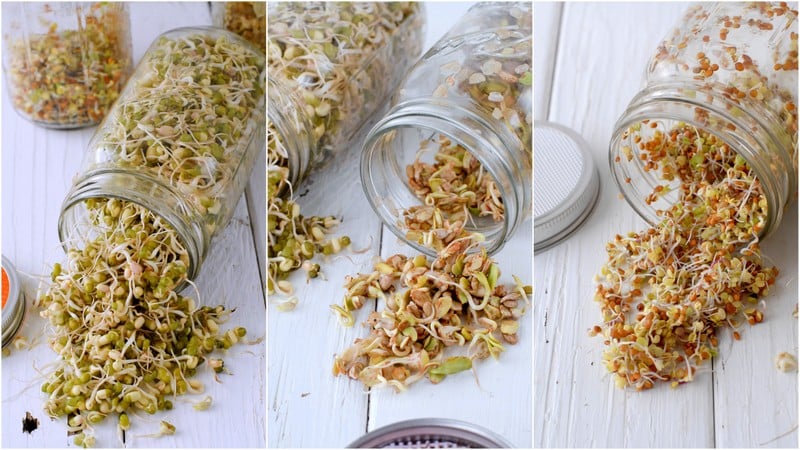
How to sprout?  All seeds have different sprouting time frames that range from 2 days to a full week.  In a test sprouting I did for this post the mung beans began to sprout in about 2 days and had filled the Mason jar within 4 days.  The other sprouts ranged to be close to that or a few days longer.
Making Sprouting Jars {a project from DIY Mason Jars}
Supplies:
  • Quart-size Mason Jars
  • Sharpie or another marker
  • Plastic needlework canvas
  • Scissors
  • Dried seeds or beans used for sprouting
SUPPLIES to make Homemade Sprouting Jars and for sprouting.
Plastic needlework canvas used to create a screened airflow for sprouting jars may be purchased at hobby and craft stores. These colorful sheets cost $0.59 each providing a sprouting jar can be created for less than $2.00/jar. The canvas comes in many colors and sizes as noted by the variations on the left.
STEP 1: Trace the lid of the jar onto the plastic canvas. Consider using varied canvas sized to allow sprouting of even very small seeds. Cheesecloth also may be substituted when sprouting very small seeds.
STEP 2: Cut out traced canvas circles(s). Insert them into the Mason jar lid ring (do not insert the metal inner circle into the lid ring; only the canvas circle). Screw lid onto quart Mason jar.
Completed sprouting jars.
How to Sprout!
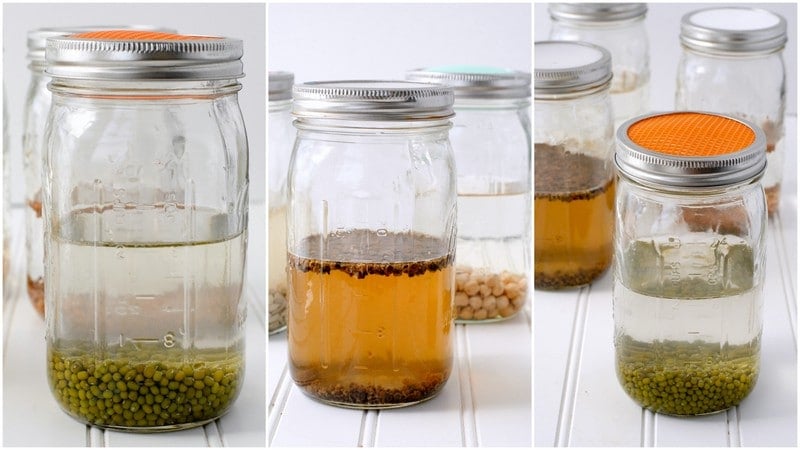
Once you have created your sprouting jars, place 2 tablespoons to the ½ cup of sprouting seeds in a given jar depending on how large a crop you wish to have.  I used ½ cup of mung beans which created a quart of sprouts; maybe a bit much for a starter batch.  You can experiment with the amounts until you decide what works for you.
{Tutorial} Sprouting 101 | BoulderLocavore.com
Many different seeds and legumes may be used for sprouting though ensure they are sold for sprouting and contain no pathogens. Mung beans (left), beet seeds middle.
Seal the jar with the screen lid.   Fill the jar with water to cover the seeds plus an inch.  Allow them to sit in a cool spot, out of direct sunlight overnight.  Drain the water through the screen top.   Place the jar on its side again in a cool spot out of direct sunlight.
Rinse the seeds twice daily by filling the jar to cover the seeds, swish the water around to rinse all the sprouts; drain through the screen top and replace on its side until the sprouts have grown to the size desired.
Once the sprouts are finished, remove them from the jar, place in a plastic bag or sealed container in the refrigerator to use.  Sprouts should stay fresh for up to a week.
Disclaimer: (Sprouting Seeds)  Following the publishing of this post it has been brought to the author’s attention there are concerns regarding  unsanitized sprouting seeds creating the exposure for E Coli and Salmonella when sprouting.  Before sprouting your own seeds, please research to make your own decision on pre-sanitizing seeds before sprouting and proceed at your own risk.  The author cannot be held responsible for any adverse reaction to home sprouted seeds.
Sprouting 101{tutorial} | BoulderLocavore.com
After 4 days: Mung bean sprouts (left), sunflower seed sprouts (middle), radish sprouts (right).

How To Make A Soap Dispenser Right

This transformation is complete in about five minutes flat, and if you use a nice-colored natural soap like this, looks beautiful next to the bathroom or kitchen sink. Love Grows Wild provides two different methods for making the soap dispenser and getting that pump attached just right.

Plant A Terrarium In A Jar


How To Plant a Terrarium in a Jar


We're pretty into plants around here and have a lot of experience with succulents and container gardens. Beautiful terrariums keep popping up online and out in the world and we've been lusting after them, wanting to make one but for some reason found the whole idea of building a terrarium a little daunting. It seemed like you needed all sorts of fancy stuff and...magic? But last week we finally took the plunge and started small, creating a sweet little terrarium out of a jar we found at the salvation army:
Gather Your Supplies:
- a jar or other container that is mostly contained
-some rocks
-charcoal (this is the fanciest ingredient)
-some dirt
-some plants
-options: some moss
Assemble:
This is the easy part. Once you have your supplies, lay some rocks in the bottom of your container. These are for drainage. Then sprinkle in some charcoal. This helps absorb the decaying matter that will be created within the terrarium. We got ours at the nursery, so you don't need to make any special trips for it. Then sprinkle in some soil and start planting. We chose succulents for our little guy and relied on using cuttings from plants we already had around. We decided to add some decorative moss to make it feel more terrarium-y (and we found it at OSH, so you don't have to go out of your way to find it).
We watered it and sealed it up. It's been about 10 days and we haven't needed to add any more water, though we did undo the latch because the condensation was starting to get out of control. The jar is sitting on a desk with medium light and seems to be doing well. Next, we plan to try some larger scale terrariums!

Thursday, May 19, 2016

Clean And Green Household Helpers

Ever wonder if those commercial cleaning products and indoor pesticides you use might do more harm than good? You're not alone. Natural homecare products {many of which contain herbs} are growing in popularity as more homemakers become aware of indoor toxins. The use of certain cleaning products has been linked to higher rates of asthma, inducing the condition in some people, as well as aggravating the condition in those who already have this chronic inflammatory disease. And although you can buy many excellent nontoxic products for your home, it's easy and fun to make your own. Just remember that even plant products can be toxic under some circumstances, and the same cautions given for other herbal uses also apply here.

SIMPLY CLEAN SOLUTIONS

With just a few basic ingredients, you can make safer "green" cleaning products for a fraction of the cost of the commercial products and without the scary ingredients. Distilled white vinegar {which contains acetic acid} has antifungal and antimicrobial properties and can eliminate mineral deposits from sink and bathroom fixtures, as well as cookware. Acidic lemon juice kills germs on countertops, cutting boards, and more. Baking soda deodorizes and dissolves grease and dirt. Mixed with other ingredients, it makes a gentle but effective scrub. All-natural castile soap made for centuries with olive oil, not only washes dirt and grease from your body, but also from household surfaces and laundry.
Many herbs have potent disinfectant properties, too. Basil, bay, cardamom, clove, coriander, eucalyptus, ginger, hyssop, lavender, lemongrass, oregano, peppermint, rose geranium, rosemary, sage, spearmint, and thyme are cleaning powerhouses. All contain a multitude of plant chemicals that possess antibacterial, antifungal, antiseptic, and antiviral actions. By adding a few drops of these essential oils to your homemade cleaning products, you can boost their cleaning power and impart a delightful fragrance that makes cleaning more pleasurable.
Because essential oils break down plastic over time, it's best to store your homemade cleaning products in labeled, dark glass containers. Plastic spray bottles are fine for short-term storage of smaller quantities. Also, remember to store all cleaning products, even those made with natural ingredients, in a cool, dark location where children and pets cannot reach them.

KITCHEN COUNTERTOP SPRAY

Use this fragrant solution to disinfect countertops, refrigerator shelves, and painted surfaces, including walls and wood trim. Feel free to experiment with other antibacterial essential oils, such as basil, thyme, or lemon.

1/2 cup distilled white vinegar
1/2 cup water
10-12 drops rose geranium essential oil

In a small, dark glass jar, combine the vinegar, water, and oil. Stir. Pour small amounts into a spray bottle as necessary.

GENTLE SPEARMINT SCRUBBER

This non-scratching, chlorine-free paste is perfect for cleaning cookware, countertops, and porcelain sinks and tubs. Lemon and lemon verbena essential oils also work well in place of the spearmint.

1 cup baking soda
1 tablespoon liquid castile soap
10-12 drops spearmint essential oil
Warm water {90 to 110 degrees F}

In a small, dark glass jar, combine the baking soda, soap, and enough water to form a thick but pourable paste. Stir in the essential oil. Apply to surfaces, wait for 5 minutes or more, then scrub with a sponge. Rinse off the residue with water.